

How To Access Ftp Server On Windows 7
Before, I had written a post on how to turn your estimator into a Windows file sharing server using a couple of unlike programs. If yous're looking for a quick style to share the files on your local computer with friends or family unit, this is an like shooting fish in a barrel way to exercise so.
All the same, if yous're looking to setup your own FTP server in Windows using IIS, you tin can do so, but it requires more technical noesis. Of grade, it also gives your more granular command over sharing and security, so information technology'southward improve for anyone who has a piddling computer know-how. Plus, IIS is all nigh running websites, so if you want to run a couple of websites along with an FTP server, so IIS is the all-time choice.
It'southward also worth noting that dissimilar versions of IIS come up with each flavor of Windows and they all have slightly unlike feature sets. IIS v.0 came with Windows 2000 and 5.1 came with Windows XP Professional. IIS vi was for Windows Server 2003 and Windows XP Professional person 64-scrap. IIS vii was a complete rewrite of IIS and was included with Windows Server 2008 and Windows Vista.
IIS vii.5 was released along with Windows seven, IIS viii released with Windows 8 and IIS 8.5 released with Windows viii.1. Information technology's best to employ IIS 7.v or higher if possible as they back up the virtually features and accept better performance.
Setup and Configure an FTP Server in IIS
The outset thing yous'll demand to setup your ain FTP server in Windows is to make sure you have Internet Information Services (IIS) installed. Remember, IIS but comes with Pro, Professional person, Ultimate or Enterprise versions of Windows.
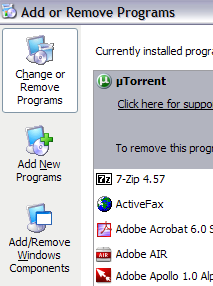
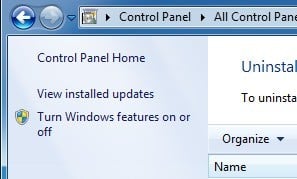
In Windows Vista and before, click on Start, Command Panel and go to Add/Remove Programs. Then click on Add/Remove Windows Components. For Windows seven and higher, click on Programs and Features from Command Panel and and so click on Turn Windows features on or off.
In the components wizard, scroll down until you come across IIS in the list and check it off. Before you click Next though, make sure you click on Details and so checkFile Transfer Protocol (FTP) Service.
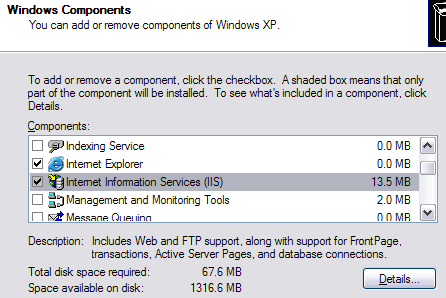
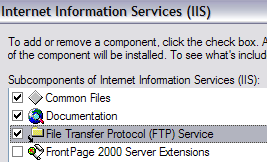
For Windows 7 and up, get ahead and click on the box side by side to Cyberspace Data Services and FTP Server. Yous also need to make certain you check the Web Direction Tools box otherwise you won't be able to manage IIS from Authoritative Tools later on. For FTP, yous demand to cheque the FTP Service box otherwise you won't have the option to create an FTP server.
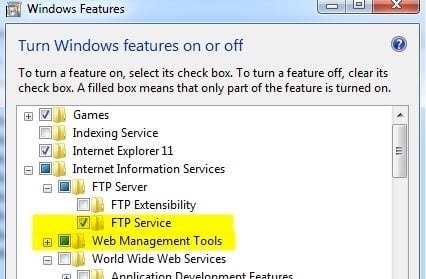
Click OK and then click Side by side. Windows will get ahead and install the necessary IIS files forth with the FTP service. You lot may be asked to insert your Windows XP or Windows Vista disc at this signal. Yous shouldn't need a disc for Windows seven or higher.
Setup and configure IIS for FTP
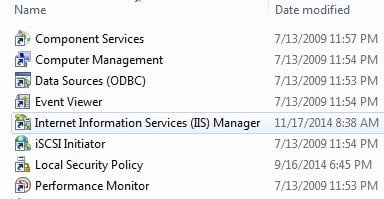
Once IIS has been installed, you may have to restart your computer. Now nosotros want to become ahead and open the IIS configuration panel to ready the FTP server. So go to Start, then Command Panel and click on Administrative Tools. You lot should now see an icon for Internet Data Services.
When you open up IIS in Vista or before for the outset fourth dimension, yous'll only see your computer name in the left hand carte. Go ahead and click the + symbol next to the reckoner name and you'll see a couple of options like Spider web Sites, FTP Sites, etc. We're interested in FTP Sites, and then expand that out also. You should see Default FTP Site, click on it.
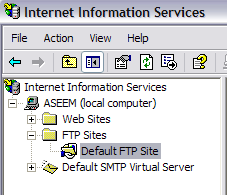
You lot'll discover after you click on the default FTP site that there are a couple of buttons at the top that look like VCR buttons: Play, Finish, and Pause. If the Play push is greyed out, that ways the FTP server is active. Your FTP server is now upwardly and running! Y'all can actually connect to it via your FTP client software. I utilise SmartFTP, but you lot can use whatever you like all-time.
For Windows 7 and college, y'all'll run into a different look to IIS. Firstly, in that location is no play push button or annihilation like that. Too, you'll run across a bunch of configuration options right on the home screen for hallmark, SSL settings, directory browsing, etc.
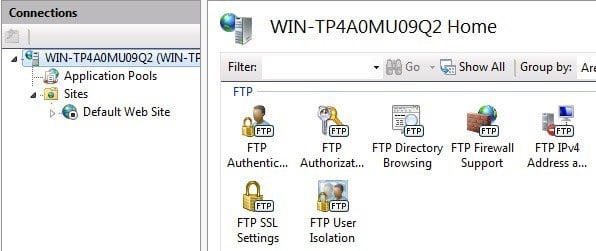
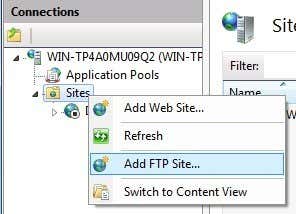
To start the FTP server here, you take to correct-click on Sites and then choose Add FTP Site.
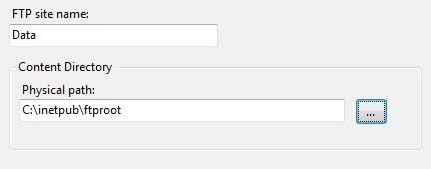
This opens the FTP magician where you start by giving your FTP site a proper noun and choosing the physical location for the files.
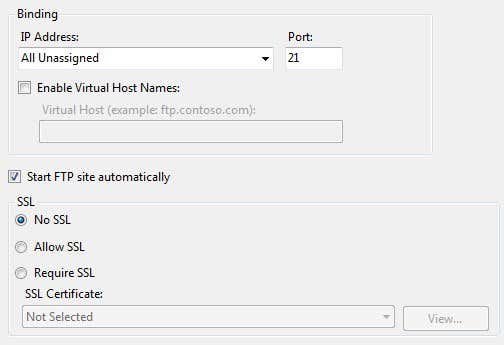
Side by side, you have to configure the bindings and SSL. Bindings are basically what IP addresses y'all want the FTP site to use. You can leave it at All Unassigned if y'all don't program on running any other website. Continue the First FTP site automatically box checked and choose No SSL unless y'all understand certificates.
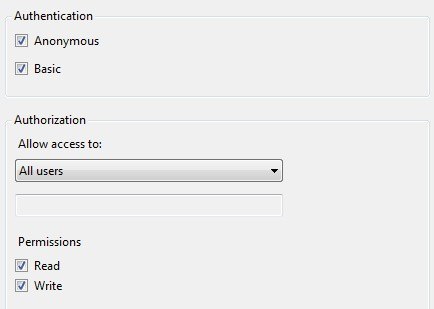
Lastly, yous take to setup authentication and authorization. You lot take to choose whether yous desire Anonymous or Basic authentication or both. For authorization, you choose from All Users, Anonymous users or specific users.
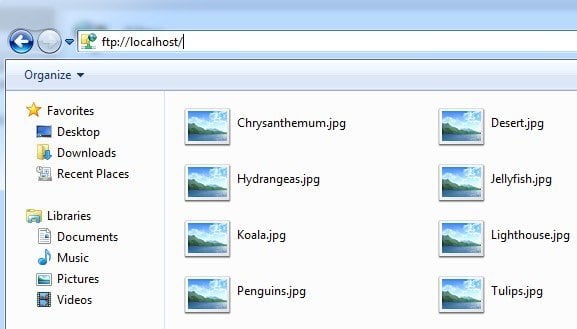
Y'all can actually admission the FTP server locally by opening Explorer and typing in ftp://localhost. If all worked well, you should come across the folder load with no errors.
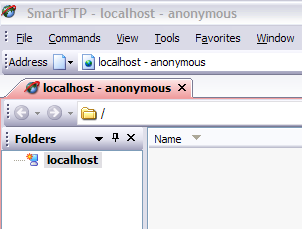
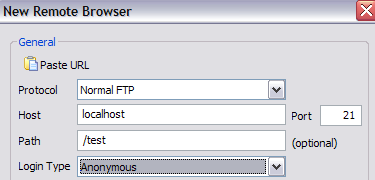
If you take an FTP plan, you can do the same thing. Open up the FTP client software and type in localhost as the host name and choose Anonymous for the login. Connect and you should now run into the folder.
Ok, then now we got the site up and running! Now where do you lot driblet the data y'all want to share? In IIS, the default FTP site is actually located in C:\Inetpub\ftproot. You can dump data in in that location, but what if you already have data located somewhere else and don't desire to move it to inetpub?
In Windows vii and college, you lot tin can pick any location you want via the wizard, but information technology's still only ane folder. If y'all want to add more folders to the FTP site, y'all have to add virtual directories. For now, just open the ftproot directory and dump some files into it.
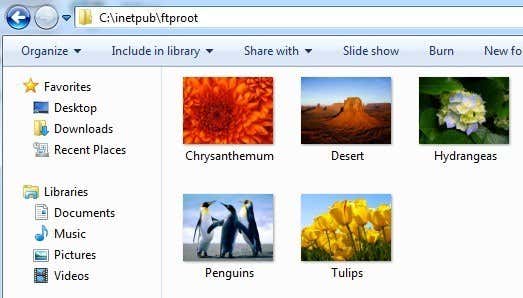
Now refresh your FTP client and yous should now run into your files listed! So yous now have an up and running FTP server on your local estimator. Then how would you connect from some other computer on the local network?
In order to do this, you'll have to open upwards the Windows Firewall to permit FTP connections to your reckoner; otherwise all external computers will exist blocked. You can do this by going to Offset, Control Panel, clicking on Windows Firewall then clicking on the Advanced Tab.
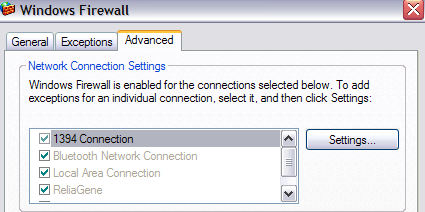
Under the Network Connection Settings section, brand certain all of the connections are checked in the left list and then click on the Settings push button. Y'all'll now exist able to open certain ports on your computer based on the service your computer is providing. Since we are hosting our own FTP server, nosotros want to check off FTP Server.
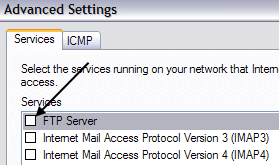
A footling popup window will appear with some settings that you can modify, just get out it every bit it is and click OK. Click OK once again at the chief Windows Firewall window.
In Windows 7 and higher, the process is dissimilar for opening the firewall port. Open up Windows Firewall from the Command Console so click on Advanced Settings on the left paw side. So click on Inbound Rules and scroll down till you see FTP Server (FTP Traffic-In), right click on it and choose Enable Rule.
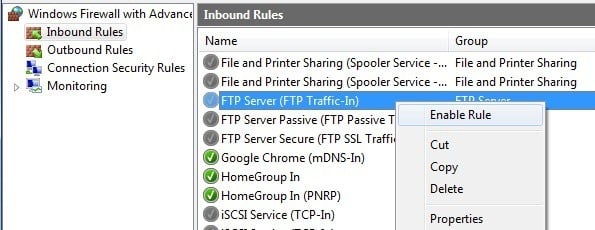
Then click on Outbound Rules and do the aforementioned thing for FTP Server (FTP Traffic-Out). You take now opened up the firewall for FTP connections. Now try to connect to your FTP site from a different calculator on your network. Yous'll need to get the IP address of the computer kickoff before you can connect into information technology from a different computer.
Go to Start, click Run and type in CMD. Type IPCONFIG and jot down the number for IP Address:
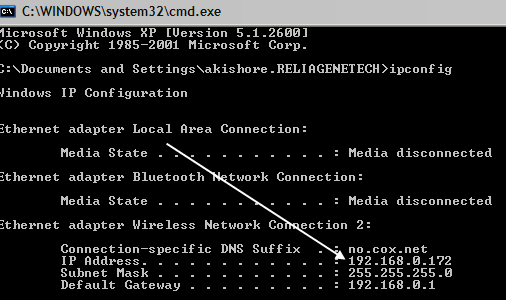
In your FTP customer on the other calculator, type in the IP Address you simply wrote down and connect anonymously. You should now be able to come across all of your files only like you did on the FTP customer that was on the local computer. Again, yous can also go to Explorer and just type in FTP:\\ipaddress to connect.
Now that the FTP site is working, you can add as many folders every bit you similar for FTP purposes. In this manner, when a user connects, they specify a path that will connect to ane specific folder.
Back in IIS, right click on Default FTP Site and cull New, and then Virtual Directory.
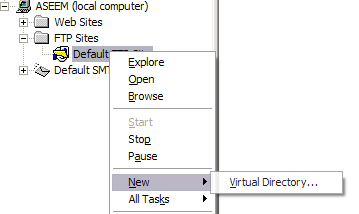
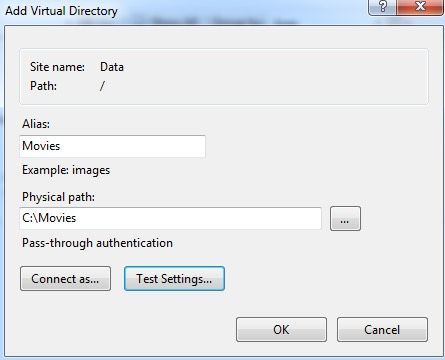
In Windows 7, you right-click on the site proper noun and choose Add Virtual Directory.
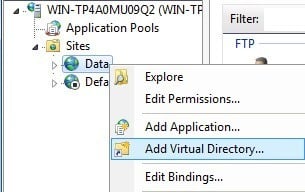
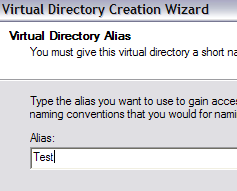
When you create a virtual directory in IIS, you're basically going to create an alias that points to a binder on the local hard drive. So in the wizard, the showtime thing you'll be asked is for a alias name. Make is something simple and useful like "WordDocs" or "FreeMovies", etc.
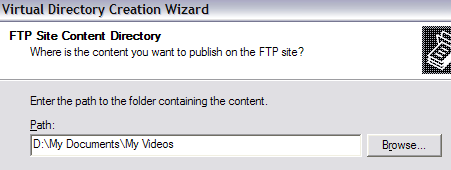
Click Next and now browse to the path where you want the allonym to refer to. So if you have a bunch of movies you want to share, browse to that folder.
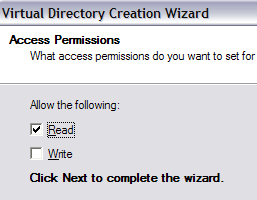
Click Adjacent and choose whether y'all desire it every bit Read access simply or Read and Write access. If you simply want to share files, check Read. If you lot want people to exist able to upload files to your computer, choose Read and Write.
Click Adjacent and so click Terminate! At present you'll encounter your new virtual directory beneath the default FTP site. In Windows 7 and up, the process is reduced to one dialog shown beneath:
You can connect to you using your FTP client by putting in the Path field "/Exam" or "/NameOfFolder". In Explorer, you would just type in ftp://ipaddress/aliasname.
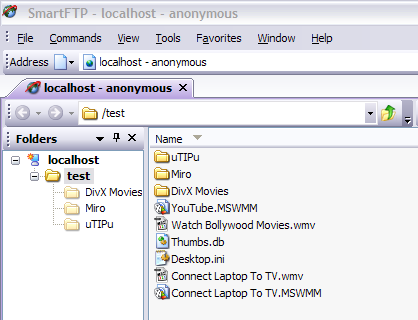
At present you'll only run across the files that are in the folder that we created the allonym for.
That'southward most it! Yous can create as many folders equally yous like! The only thing other thing that you lot would need to practice is to give out your public IP address to anyone who is connecting from outside of your internal network. If you want users to connect from anywhere in the world, you'll have to give them your public IP address, which you tin can detect out by going to http://whatismyipaddress.com/.
Finally, you'll need to forward the FTP port on your router to your local calculator that is hosting the FTP server. Port Forrard is a great site to show y'all how to frontward ports on your router to computers on your habitation network. You should also read my other posts on port forwarding and dynamic DNS:
What is Port Forwarding?
Setup Dynamic DNS for Remote Access
This is definitely a lot of info with a bunch of steps; if you take whatever questions well-nigh all of this, postal service a comment! Relish!
Exercise not share my Personal Data.
Source: https://www.online-tech-tips.com/computer-tips/setup-ftp-server-in-windows-iis/
Posted by: lopezmadve1970.blogspot.com
0 Response to "How To Access Ftp Server On Windows 7"
Post a Comment